


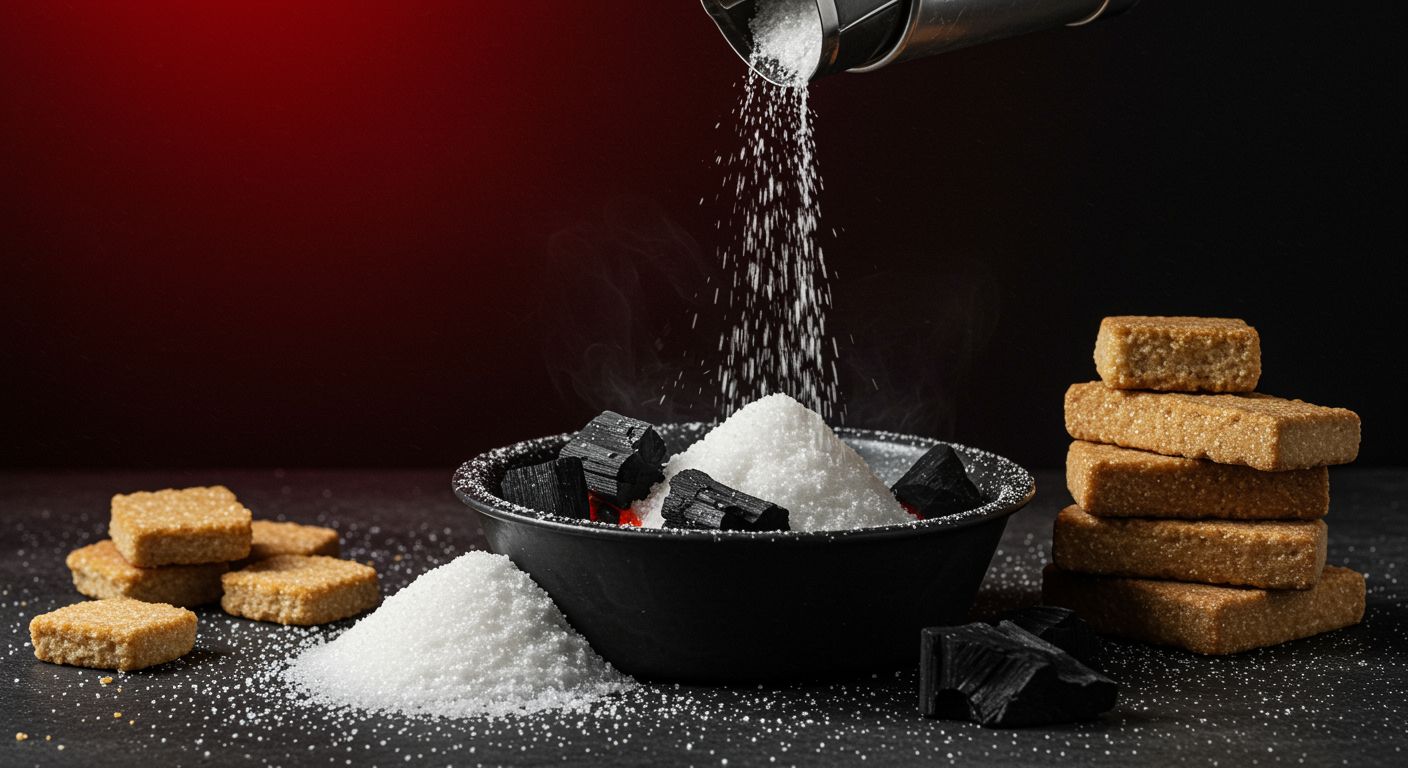

Sugar is so normalised in our diet that we barely see it anymore. It’s in soft drinks, pastries, sauces, breads, flavoured waters, “fit” cereals and even in products that are marketed as healthy. If you open your pantry right now, it’s very likely full of this “white poison” hidden under different names.
At Scorus Fitness we see it every day in people who train hard but can’t understand why their health, body composition or energy don’t improve. And the answer, very often, is something as simple (and as dangerous) as too much sugar.
Why is sugar called “white poison”?
Calling sugar “poison” may sound extreme if you think only about a teaspoon in your coffee. The problem is not a one‑off intake; it’s the chronic, uncontrolled consumption we have today:
- Soft drinks, packaged juices and “energy” drinks
- Breakfast cereals and “kids’” biscuits
- Ready-made sauces (ketchup, tomato sauce, BBQ…)
- “Light”, “zero” or “fitness” products packed with added sugars
- “Vitamin waters” or “aloe waters” loaded with sugar
The reality is that we’re taking in a ridiculous amount of sugar throughout the day, far above what our body can handle without consequences.
“WHO recommends reducing the intake of free sugars to less than 10% of total energy intake, and suggests going down to 5%.” – WHO Sugar Intake Guidelines
A teaspoon won’t kill you, but a lifetime of excess sugar can – very slowly.
How did we end up eating so much sugar?
There was a time when sugar was sold as quick, healthy energy. In the 60s and 70s it was seen as the perfect fuel to “get through the day”, and it was even promoted as helpful for weight loss. At the same time, fats were demonised far more than sugar.
On top of this came a dangerous combination:
- The food industry adding sugar to almost everything to improve taste and create dependence
- Aggressive marketing, especially targeting children and families
- Misinformation and over‑information: contradictory messages, misinterpreted studies and passing fads
The result: today even a small child can easily exceed WHO sugar recommendations just with breakfast (sweetened cocoa + biscuits + boxed juice).
Knowing this is the first step. The second is to act on your shopping basket and your pantry.
What does excess sugar do to your body?
High and constant sugar intake is linked to:
- Childhood and adult obesity
- Insulin resistance and type 2 diabetes
- Increased cardiovascular risk (heart attack, stroke)
- Non‑alcoholic fatty liver disease
- Tooth decay and dental problems
- Low‑grade chronic inflammation
- Higher risk of certain types of cancer
Sugar also acts on your brain as a highly addictive substance:
- It activates pleasure and reward circuits
- It triggers cravings and binges
- You end up needing more and more to get the same feeling
“Just like tobacco and alcohol, sugar is indeed a drug. Its use should be discouraged.” – Paul van der Velpen, Amsterdam head of health
The key question is: who controls your body – you or your sugar addiction?
Sugar and addiction: who is in control of your body?
Sugar gives you a quick pleasure hit… and then takes its toll:
- Blood sugar spike → insulin spike
- Sharp drop → hunger, fatigue, irritability
- Craving returns → you repeat the cycle
The deeper you go into this loop, the harder it is to get out. This is not just about “weak willpower”; it’s about an overstimulated dopamine system.
Admitting you have a problem with sugar is not a failure; it’s the first step towards taking control back. From there, you need to work with a strategy:
- Review your overall diet
- Learn to read labels
- Reorganise your pantry
- Ask for professional help if needed
If you want us to guide you through that process, you can consider personal training with an integral approach or an online consultation to review your case.
Three key rules to escape the “white poison”
The original article proposed three simple rules. Let’s refine them with a more practical and up‑to‑date approach.
1. Drink water and avoid “liquid calories”
Nothing is going to be healthier than drinking water regularly.
Always prioritise:
- At meals: water
- Between meals: water, unsweetened herbal teas, coffee or tea without added sugar
- Occasionally: a soda, a juice, a cocktail… but as an exception
Avoid making it a habit to drink:
- Soft drinks (even if they say “zero” or “light”)
- Commercial milkshakes
- Packaged juices, even “100% fruit”
- “Energy” or “vitamin” drinks
- Flavoured waters, “aloe waters”, etc.
Practical rule: if it comes in a bottle, tastes sweet and you didn’t prepare it yourself, be suspicious.
Even with apparently innocent drinks like coffee or tea, watch added sugar, syrups, whipped cream and toppings. A black coffee or coffee with a bit of milk can be part of a healthy diet; a syrup‑loaded frappuccino with whipped cream is not.
2. Question everything, even if it sounds healthy
Marketing knows you’re reading more labels, so it has learned to disguise sugar:
- “No added sugar” but full of syrups, fruit concentrates or maltodextrin
- “Light”, “zero”, “fit”, “healthy”… with long ingredient lists
- “Whole‑grain” cereals for kids with more sugar than fibre
- “Sports” bars that are basically candy
Before putting a product in your trolley:
- Check the ingredients list: if sugar or its aliases (sucrose, glucose syrup, dextrose, fructose, maltodextrin…) appear at the top, that’s a red flag.
- Look at the nutrition table:
- Check grams of sugar per 100 g
- More than 10–12 g of sugar per 100 g is already high for regular consumption
- Ask yourself: does this nourish me, or is it just empty calories?
The goal is not to demonise big companies, but to be smarter than their marketing. Once you master this game, you stop falling into traps and it becomes much easier to choose well.
3. Read every label (yes, every single one)
At first it’s tedious; then it becomes automatic. You need to know what is going into your body.
Pay special attention to:
- Sugars per 100 g and per serving
- The real serving size (often unrealistically small)
- Ingredient list (the shorter and more recognisable, the better)
Typical examples:
- Drinking chocolate powders with 70–80% sugar
- “Fruit” yoghurts that are basically sugary desserts
- Tomato sauces with more sugar than tomato
- “Prepared salads” with sweet and sugary dressings
Target: most of what you eat should be food, not ultra‑processed “edible products”.
Over time, you’ll identify your safe choices and shopping will become almost automatic.
How to reduce sugar in your daily life without going crazy
You don’t need to do it perfectly from day one. Start with these steps:
- Clean up your pantry
- Remove or reserve for very occasional use: biscuits, pastries, sugary cereals, soft drinks, cheap chocolate, sweet sauces.
- Cut back on the sugar you add yourself
- If you use 2 teaspoons in your coffee, go down to 1 for a week, then half, then none.
- Swap sugary desserts for whole fruit
- Better an orange than a juice; better a banana than a milkshake.
- Prioritise real food in your main meals
- Vegetables + quality protein + healthy fat + complex carbs.
- Don’t keep “sugar bombs” within easy reach
- What you don’t have at home, you can’t eat in a moment of anxiety.
If you want clear structures and a tailored plan, combine these guidelines with a personal training programme and, if you want to go deeper, our Scorus Academy can help you understand the bigger picture.
When should you seek professional help?
If you feel that:
- You can’t go a day without eating something sweet
- You often binge on sugary products
- You eat sugar secretly or with guilt
- You’ve tried to quit many times without success
you may be dealing with an addictive and emotional relationship with sugar.
In those cases, “just trying harder” is rarely enough. It can be very useful to:
- Work with a nutrition professional
- Have a coach who understands the context
- In some cases, get psychological support
You can take the first step by requesting a private consultation or via our online consulting services.
Conclusion: open your eyes and clean up your pantry
Sugar is not a poison because it exists; it’s a poison because we consume it without awareness, control or measure. It’s in your pantry, your fridge, your favourite restaurant and in the ads you see every day.
The good news is that you decide what goes into your trolley and into your body:
- Drink more water and less liquid sugar
- Question “light”, “fit” and “zero” promises
- Read labels and choose products that truly nourish you
- Gradually reduce your dependence on sweetness
Your health, energy and body composition will improve far more than you imagine just with this change. And if you want guidance step by step, at Scorus Fitness and the Scorus Academy you’ll find a team ready to help you fight, once and for all, the white poison in your pantry.